When your grandmother always wore pearls to church, or your father never left the house without a proper tie, a modern, casual funeral booklet can feel wrong. Some lives were lived with formality, dignity and tradition – and they deserve to be honoured the same way.
That’s where traditional funeral order of service templates come in. With classic layouts, elegant typography and subtle decoration, these booklets feel timeless and respectful – especially fitting for church funerals, older generations, and families who value heritage and ritual.
In this guide, we’ll look at:
- The history of traditional funeral orders of service
- Key features of classic and vintage‑style templates
- When a traditional design is the right choice
- How to customise a traditional template step by step
- Design tips to keep things elegant rather than old‑fashioned
- Common mistakes to avoid
- Questions families frequently ask about traditional funeral booklets
When you’re ready to start designing, you can browse all styles – including classic and traditional – here: Free funeral order of service templates – easily customisable
A Brief History of Traditional Funeral Orders of Service
Printed funeral order of service booklets have been part of UK tradition for over a century, especially for church services and formal ceremonies.
Originally, they served practical purposes: helping congregations follow the liturgy, providing hymn words, and marking significant funerals for clergy, community leaders or military figures.
Before home printers, local printers produced these booklets using simple black ink on cream paper, classic serif typefaces, and plain borders – much like prayer books of the era.
Over time, they became valued for more than just guidance during the service. Families appreciated the keepsake value and the sense of formality a printed booklet brings.
Today you can create these booklets online in minutes, but the traditional look is still very much in demand – especially for church funerals, older relatives and families who prefer a classic touch.
What Makes a Funeral Template “Traditional”?
Traditional funeral order of service templates tend to share certain design elements. They feel calm, dignified and familiar, like a well‑set church service or a favourite old book.
Quick Recognition Guide: Is It Traditional?
- Typography: Serif fonts (like Times or Garamond) rather than modern sans-serif
- Colours: Black, cream, ivory – perhaps navy or burgundy accents
- Layout: Symmetrical, centered, clear hierarchy
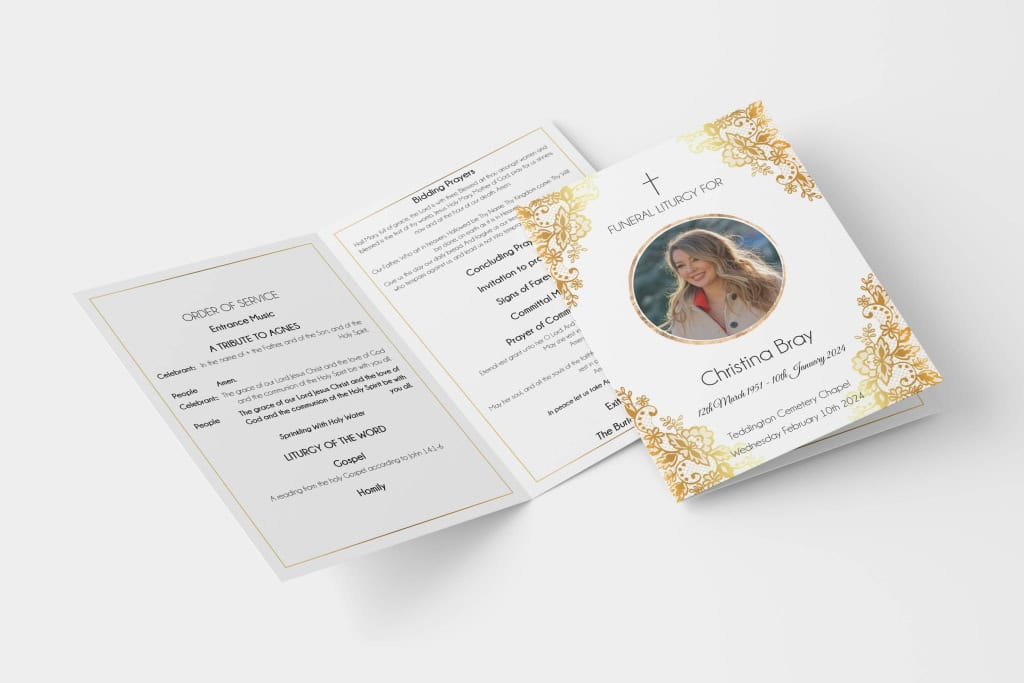
- Decoration: Fine borders and corner flourishes, not bold graphics
- Feel: Like a prayer book or classic novel, not a magazine
Classic Layouts
Traditional templates usually feature:
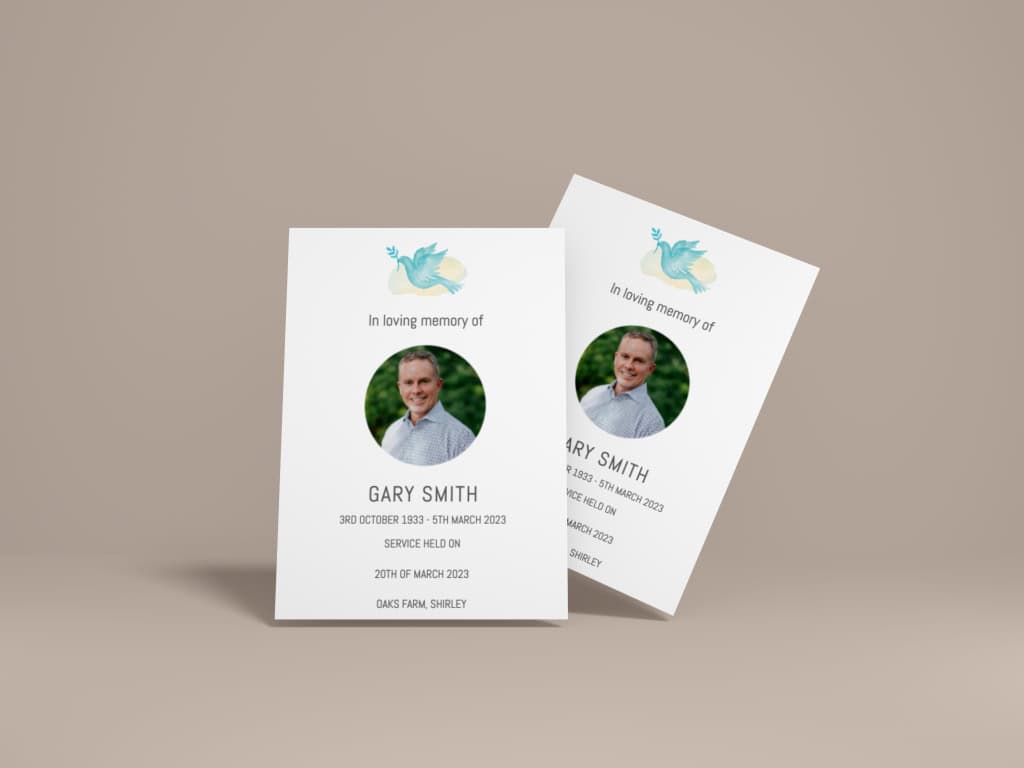
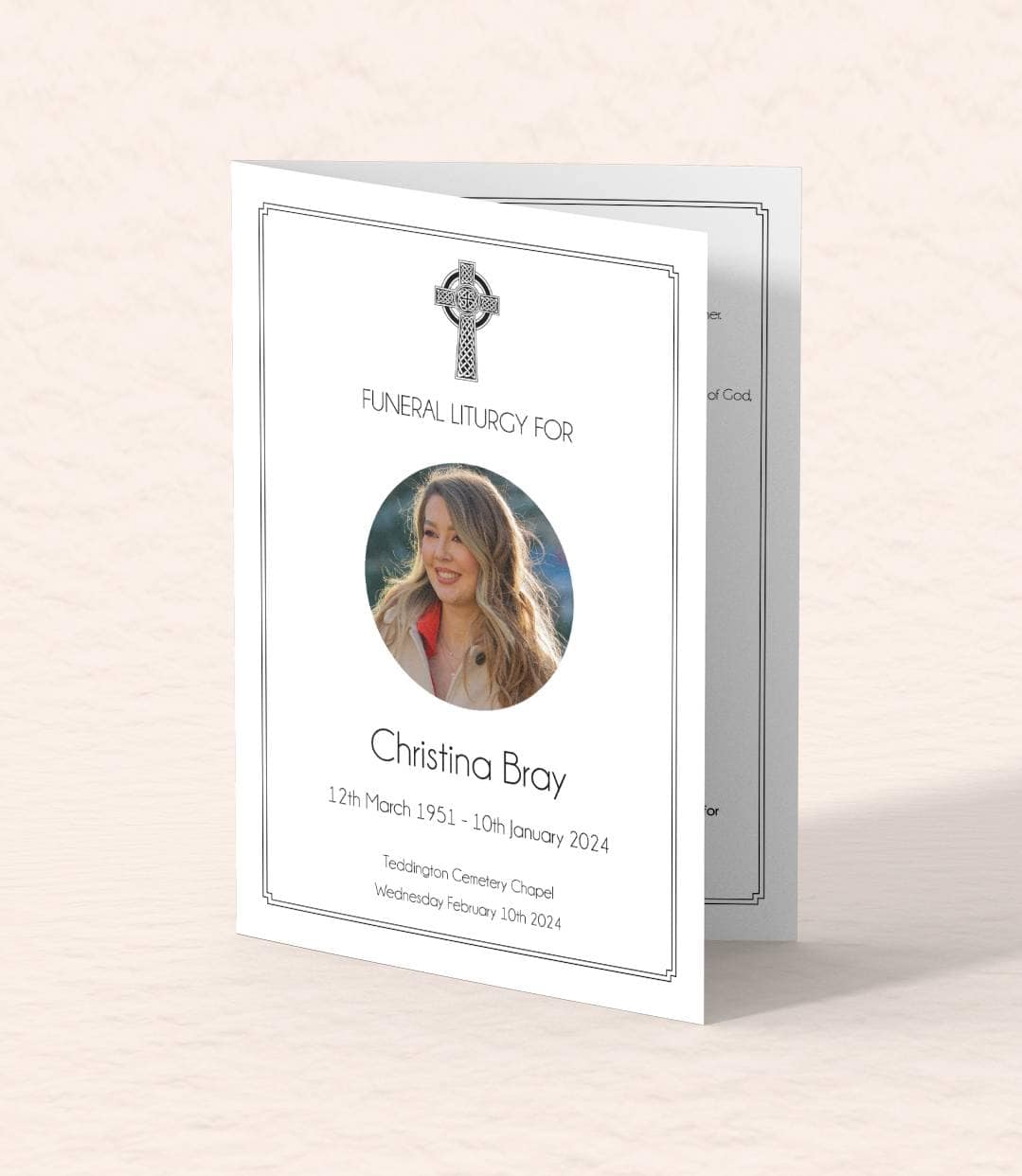
- A clear cover with the name, dates and a single photo
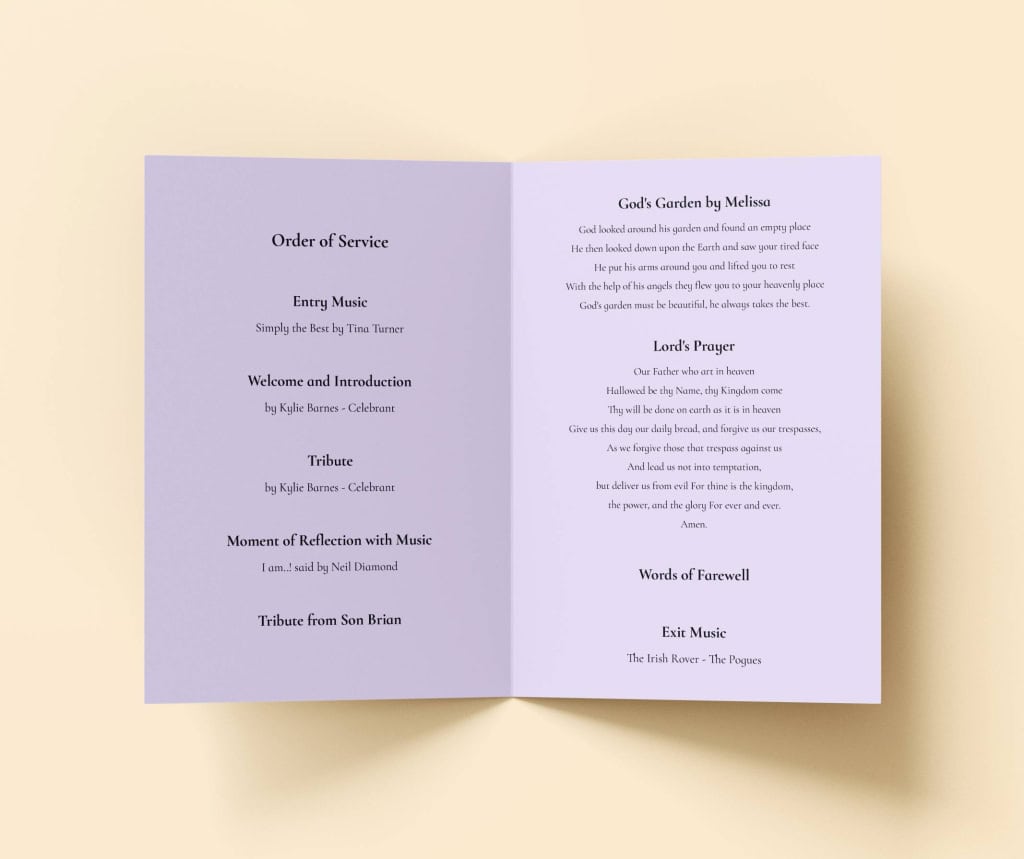
- Inside pages arranged in simple columns of text
- Headings such as “Welcome”, “Hymn”, “Reading”, “Eulogy”, “Prayers”, “Committal”
- Straightforward page order that mirrors the flow of a typical funeral service
The aim is to make it easy for anyone to follow the ceremony, even if they’ve never been to a funeral before.
Serif Typography and Formal Type
Typography in traditional templates is often:
- Serif fonts (those with small “feet” on the letters), similar to what you see in novels, prayer books or newspapers
- Small caps or slightly larger type for headings
- Occasional use of italic for readings or quotes
The overall impression is of something you’d be comfortable seeing in a church pew or on a memorial sheet.
Subtle Borders and Frames
Decoration is usually:
- Fine line borders around the page or cover
- Small flourishes or corner elements
- Simple rules (lines) between sections
You won’t see busy patterns or very bold graphics. The decoration supports the text; it doesn’t shout over it.
Calm Colour Palettes
Traditional colour schemes stay within:
- Black or dark grey text
- Cream, ivory or white backgrounds
- Optional accents in navy, deep green, burgundy or gold
If colour is used, it’s usually restrained and tasteful – perhaps for headings, a small motif or a border.
Formal Paper and Finishing
Traditional designs often look best on:
- Ivory or cream paper/card
- Slightly textured or uncoated stocks
- Simple matt/silk or no lamination on the cover
On your site, families can choose these options on the printing page: Funeral Order of Service Printing UK – Next Day Delivery
Elegant Vintage Styles Within Traditional Templates
“Traditional” doesn’t mean every template looks identical. Within this category, there are several elegant vintage styles you can choose from.
1. Prayer‑Book Inspired Layouts
These designs echo the look of classic prayer books and hymnals:
- Narrow margins with simple, centred headings
- Justified text (neat left and right edges)
- Minimal decoration, perhaps a small cross or motif
Perfect for: Church of England, Methodist or other liturgical services, older relatives who preferred familiar hymn book styles, and very formal funerals where understatement is important.
2. Victorian‑Influenced Flourishes
Some templates take gentle inspiration from the Victorian era:
- Fine ornamental borders
- Decorative but still legible serif fonts
- Occasional scrollwork or corner embellishments
Used carefully, these elements add a sense of heritage and craftsmanship without feeling cluttered.
3. Art Deco and Early 20th Century Touches
For those who like a little character but still want something classic, Art Deco‑influenced templates may feature:
- Geometric lines and borders
- Symmetrical layouts
- Simple, elegant type with a vintage twist
These can feel appropriate if your loved one was born in the early/mid 20th century, or simply enjoyed that era’s style.
4. Heritage and Military‑Style Templates
For military, police, or services for those with strong civic connections, traditional templates may include:
- Crests, badges or regimental insignia (used with care and respect)
- Strong lines and clear blocks of text
- Bold but still formal typography
These designs can sit comfortably alongside uniforms, flags and processions, keeping everything visually consistent.
If you need something very specific – for example, combining a regimental crest with your choice of hymn – you can request a bespoke layout through your free custom template option on the templates page: Request a free custom funeral template (scroll to the request form)
When Should You Choose a Traditional Funeral Template?
Traditional templates work best when formality matters – whether because of the venue, the person being honoured, or the expectations of those attending. Here’s when they’re often the right choice:
1. Historic or Formal Venue
Parish churches, cathedrals and traditional crematorium chapels often call for classic booklets that match their setting. If the service is being held somewhere with history and gravitas, a traditional design feels at home rather than out of place.
2. Your Loved One’s Personal Style
If they wore smart suits, kept a traditional home, and preferred hymns to pop songs, a classic booklet honours who they truly were. Consider their clothing, their furniture choices, their favourite literature – if they lived traditionally, the order of service should reflect that.
3. Older Guests Need Clarity
Many older attendees find comfort in clear fonts, familiar hymn layouts and recognisable structures – especially at an emotional time. A very modern or experimental design can sometimes feel confusing or inappropriate to them.
4. Formal Religious Liturgy
Church of England, Catholic or other structured services often include multiple readings, responses and prayers. Traditional templates are built for this level of detail, with:
- Space for multiple readings and responses
- Clear headings for each part of the liturgy
- Room for longer prayers
5. Timeless Keepsake Value
Classic designs age beautifully. In twenty years, they’ll still look dignified – not dated. Families often keep funeral booklets in memory boxes, alongside photos and letters. If this long-term value matters to you, a classic layout on good paper is usually a safe choice.
How to Customise a Traditional Template Step by Step
Once you’ve chosen a traditional template from your free funeral order of service templates, here’s how to adapt it.
Step 1: Confirm the Order of Service
Speak with the minister, priest, celebrant or your funeral director and confirm:
- Which hymns and readings will be used
- The exact order of the service
- Any responses or congregational prayers to include
Your How to write funeral order of service guide can help you understand typical structures.
Step 2: Add the Essentials to the Cover
Most traditional covers include:
- Full name (with titles, if appropriate)
- Dates of birth and death
- A single, respectful photo
- Date, time and location of the service
- Optional: short line such as “A Service of Thanksgiving” or “A Celebration of Life”
In a classic template, the photo is often centred or top‑aligned, with the text neatly arranged beneath.
Step 3: Lay Out Hymns, Readings and Prayers
Inside, work through in order:
- Welcome/opening words
- Hymn 1 (title and full lyrics if you want people to sing)
- Reading(s), with book/chapter/verse and reader’s name
- Eulogy or tribute
- Further hymns or songs
- Prayers and the Lord’s Prayer (if included)
- Committal, blessing and closing words
Traditional layouts often use one column of text per page or sometimes two narrower columns. Keep line lengths comfortable to read and avoid very cramped text.
Step 4: Add Photos Thoughtfully
Traditional styles can still include photos; they’re just used more sparingly:
- A larger portrait on the cover
- 1–3 smaller photos on an inside page or at the back
- Occasional small image near a favourite quote or poem
Aim for emotional impact rather than quantity. A few well‑chosen images often say more than a crowded collage in a classic design.
Your Funeral Order Of Service Examples & Ideas page can give you inspiration on how other families balance text and photos.
Step 5: Check Names, Dates and Details Carefully
Because traditional designs often look quite formal, small mistakes can stand out. Before you send the booklet to print, double‑check:
- Correct spelling of all names (including middle names and titles)
- Dates – birth, death, and service
- Verse references, hymn titles and lyrics
- Any official information such as military ranks or honours
It can help to ask at least one other family member to proof‑read everything slowly.
Step 6: Choose Paper, Pages and Printing
On the Funeral Order of Service Printing page, you can:
- Pick a suitable page count (4, 8, 12, 16 or 20 pages)
- Choose ivory, cream or silk paper/card for a classic look
- Decide whether you’d like matt or velvet lamination on the cover for extra durability
Traditional designs often look beautiful on slightly heavier card covers and a smooth, good‑quality inside paper.
With your service, you also get:
- Free artwork checking
- Free UK delivery
- Optional express and next‑day options if timings are tight
Design Tips for Traditional Funeral Templates
To keep your design feeling elegant rather than old‑fashioned, a few simple principles help.
Keep Fonts Consistent
- Use one serif font for most text, possibly a complementary one for headings
- Avoid mixing lots of different font families
- Keep script and calligraphy fonts for short headings only, if at all
Use Decoration Sparingly
- Borders, corner flourishes and dividers are great – in moderation
- Avoid heavy patterns behind text; they reduce readability
- Let white (or cream) space do much of the visual work
Mind the Margins
Traditional booklets usually have:
- A comfortable margin on all sides
- Text well away from the fold and edges
- Page numbers, if used, kept small and unobtrusive
This not only looks good but also allows for trimming and stapling without cutting into content.
Prioritise Readability, Especially for Older Guests
- Body text size should be generous – never tiny
- Use dark text on a light background for main content
- Break longer sections into paragraphs; big blocks of unbroken text can be hard to follow
If you’re unsure, print a single test page at home. If someone can read it easily at arm’s length, you’re probably fine.
Common Mistakes When Using Traditional Templates (And How to Avoid Them)
Using Too Many Fonts
Stick to one or two. Mixing serif, script and decorative fonts looks cluttered, not classic.
Overdoing the Decoration
One border style is elegant. Three different border patterns is busy. Less is genuinely more with traditional designs.
Tiny Text to Fit Everything In
If older guests can’t read it comfortably, choose more pages rather than shrinking the font. An 8-page booklet is better than a 4-page booklet no one can read.
Forgetting to Proofread Thoroughly
Because traditional designs look so formal, typos stand out more. Get two people to check everything – names, dates, hymn numbers, readings.
Choosing Glossy Paper for Everything
Traditional styles often look better on matt, cream or textured paper. Save gloss for modern designs. The paper texture is part of the traditional aesthetic.
FAQs About Traditional Funeral Order of Service Templates
Are traditional templates only for religious funerals?
No. Traditional styling with classic fonts, borders, cream paper – works beautifully for non-religious or humanist services too. You simply adjust the wording: instead of “Hymn” and “Prayer,” you might use “Music,” “Reading” or “Reflection.”
The formal, dignified aesthetic has nothing to do with religion itself. It’s about showing respect, creating structure, and giving guests something clear to follow. Many humanist celebrants actively prefer traditional layouts because they feel timeless and inclusive.
Can I still include colour in a traditional design?
Yes – just keep it restrained. Soft blues, greens, burgundies and golds work beautifully as accent colours for headings, lines or small motifs. The main text is usually still in black or dark grey.
What if the family is divided between wanting modern and traditional?
You can choose a classic layout but keep it clean and simple, with one strong cover photo and minimal decoration. This often feels like a comfortable middle ground between very traditional and very modern.
Is it disrespectful to use photos in a traditional booklet?
Not at all. Many traditional designs incorporate a portrait on the cover and one or two photos inside. The key is to choose images that feel appropriate and arrange them with care.
Where do I start if I want a traditional design?
Begin by browsing the templates and looking for styles labelled Classic, Calm, Traditional or Religious: Free funeral order of service templates
Once you’ve customised your chosen design, you can have it professionally printed with free UK delivery via: Funeral Order of Service Printing UK – Next Day Delivery
Ready to Create Your Traditional Order of Service?
A traditional design isn’t about being old-fashioned – it’s about choosing something timeless, dignified and appropriate. Whether you’re honouring someone who lived a formal life, or you simply want a booklet that will look respectful in any setting, classic templates offer elegance that never goes out of style.
Start by browsing the templates labelled Classic, Calm, Traditional or Religious: Free funeral order of service templates – easily customisable
Once you’ve customised your chosen design, you can have it professionally printed with free UK delivery via: Funeral Order of Service Printing UK – Next Day Delivery